Free Quotes From One Vetted Local Installer
Solar Panel Installation Aberdeen
Your energy, in your hands.
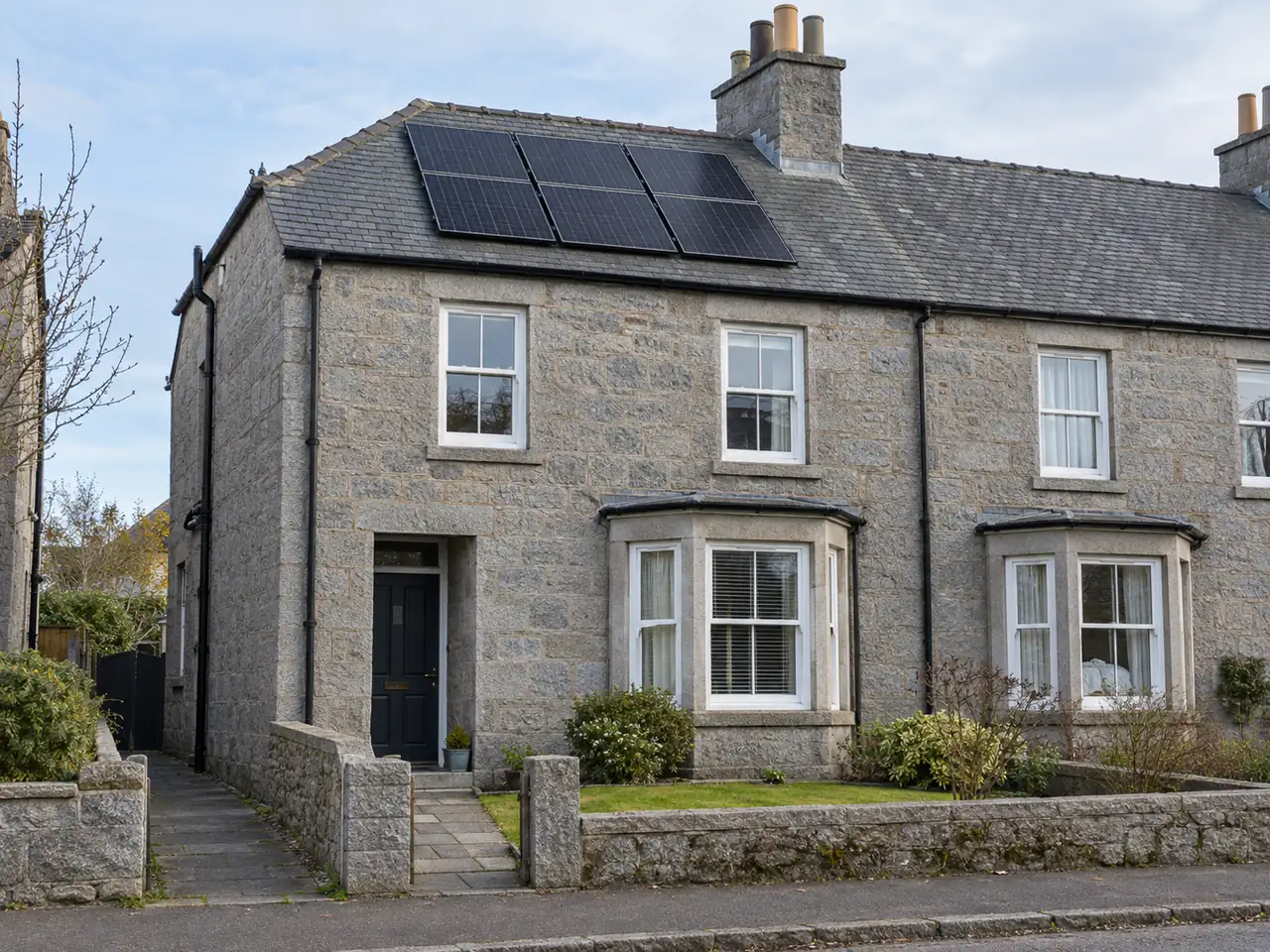
Solar Panels Aberdeen puts you in touch with one vetted local solar installer for a free, no-obligation quote. Your roof generates the power, your home uses it first, and you buy less from a market you don't control.
- Around 60 seconds
- MCS certified
- Rated 4.5 on Trustpilot
- Rated 5 stars on Google
Get Your Free Installer Quote
- 25,000+MCS-certified solar installations across Aberdeen and Aberdeenshire
- 88%of London's annual solar output, from the same system
- 1,447hours of sunshine a year at Dyce, above the UK average
- 0% VATon home solar and batteries until 31 March 2027
The Return
What Solar Panels Save in Aberdeen
Every unit your roof generates and your home uses is a unit you don't buy. In Northern Scotland that unit currently costs 26.35p on the standard price cap. The units you don't use go to the grid and earn a smaller export payment.
How much you save depends on one thing more than any other: how much of your own power you use. That depends on when you're at home.

Bill Savings
£235
The 25% of your solar power used at home, at 26.35p a unit.
Export Income
£322
The other 75%, sent to the grid under the Smart Export Guarantee at 12p a unit.
Total Annual Benefit
£557
Bill savings and export income added together, per year.
For a typical 4 kWp system in Aberdeen, that's roughly £515 to £595 a year with panels alone.
How These Figures Are Worked Out
These figures are deliberately cautious. They're built from public data, and you can check each part.
- Generation: A 4 kWp system facing south at a 35° pitch in Aberdeen produces about 3,573 kWh a year, according to the European Commission's PVGIS tool. Four kilowatts is close to the average home system in Scotland, according to Home Energy Scotland.
- How much you use at home: Taken from the official lookup tables that MCS-certified installers work from (MCS guidance note MGD 003), for a home using 3,500 kWh of electricity a year. Many savings estimates assume 50%. That figure comes from the old Feed-in Tariff, which simply deemed half of all generation to be exported. The MCS tables give lower, more realistic figures.
- Import price: 26.35p per kWh, the Ofgem price cap unit rate for Northern Scotland (Direct Debit, 1 October to 31 December 2026). VAT has been removed from electricity bills until 31 March 2027, so this rate carries no VAT.
- Export price: 12p per kWh, the flat rate on Octopus Energy's Outgoing tariff. Other suppliers pay more; Ecotricity was paying 16p to customers of any supplier in September 2026.
- Battery: 5 to 6 kWh of usable storage, the size MCS tables use for the figures here.
| Home in the daytime? | Battery | Used at home | Bill savings | Export income | Total a year |
|---|---|---|---|---|---|
| Home all day | No | 32% | £301 | £292 | £593 |
| In half the day | No | 25% | £235 | £322 | £557 |
| Out all day | No | 17% | £160 | £356 | £516 |
| Home all day | Yes | 72% | £678 | £120 | £798 |
| In half the day | Yes | 63% | £593 | £159 | £752 |
| Out all day | Yes | 61% | £574 | £167 | £742 |
What's left out: rising electricity prices, a hot-water diverter, an electric car or a heat pump. Each of those usually increases savings. Your own figures will depend on your roof, your usage and the tariffs you choose.
The Proof
Does Solar Work in Aberdeen?
Yes. It produces less over a year than it would in the south of England, and you should know by how much. Across the year, a south-facing roof in Aberdeen generates about 88% of what the same system would in London. The gap is almost all in winter. From April to August, Aberdeen is close behind, and in May it comes out ahead.
Monthly output from 1 kWp of south-facing panels (kWh)
| Month | Aberdeen | London |
|---|---|---|
| January | 27.7 | 40.7 |
| February | 44.2 | 53.2 |
| March | 78.2 | 86.6 |
| April | 105.7 | 114.6 |
| May | 122.4 | 119.5 |
| June | 117.7 | 122.6 |
| July | 113.5 | 123.2 |
| August | 101.5 | 110.4 |
| September | 79.6 | 95.2 |
| October | 50.6 | 68.5 |
| November | 31.2 | 48.2 |
| December | 21.1 | 36.3 |
| Year | 893.3 | 1,018.9 |
Long Summer Days
Around the summer solstice, the sun rises in Aberdeen at about 4:12am and sets after 10pm, close to 18 hours of daylight. That long day is why May, June and July carry most of the year's output. December is the opposite, with under seven hours of daylight, so winter generation is low.
Cool Weather Helps
Solar panels are rated at 25°C and lose a little output for every degree hotter they run. Aberdeen's summers stay cool: the average July high at Dyce is 18.5°C. PVGIS puts the output lost to heat and low light at 2.6% a year in Aberdeen, against 4.8% in London.
More Sunshine Than You'd Think
The Met Office weather station at Dyce records an average of 1,447 hours of sunshine a year, more than the UK average of 1,403. Sunshine hours don't translate directly into output, because the sun sits lower in the sky this far north. It does put the "it never stops raining here" idea to bed.
Swipe for more
Over 25,000 homes and businesses across Aberdeen City and Aberdeenshire already have MCS-certified solar, and around 200 more are added every month.
The Energy City
Aberdeen powered the country. Now power your home.
For fifty years, the city's skills and industry helped keep Britain supplied with energy. Forties was discovered in 1970, about 110 miles offshore, and brought its first oil ashore in 1975. The next chapter is being written on rooftops across the northeast, one home at a time.
Every unit your panels generate is low-carbon as well, and Home Energy Scotland puts the saving from a typical home system at up to a tonne of carbon a year.
The Cost
What Solar Panels Cost in Aberdeen
There's no single price. System size, how easy your roof is to reach, and whether the panels sit on the roof or are built into it all change the figure. Local installation data gives a reliable starting point.
Cost per kW
£1,672 per kW
The average cost of MCS-certified solar installations across Aberdeen City and Aberdeenshire in 2025, from MCS installation data. Government figures for Scotland as a whole put systems up to 4 kW at £1,767 per kW (DESNZ, 2025/26).
A Typical System
About £6,700
For 4 kWp, roughly 10 panels depending on panel size. Home Energy Scotland puts the average Scottish system at around 4 kWp and £6,500. These figures cover panels, inverter, fitting and grid connection. A battery is extra.
Payback
About 11 to 13 Years
On the savings figures above: sooner if you're home in the day, longer if you're out. Panels should last 30 years or more, so most of their working life comes after they've paid for themselves. Plan for one inverter replacement along the way, typically after around 12 years.
31 March 2027
The 0% VAT Deadline
Solar panels and batteries fitted to homes currently carry 0% VAT. That's legislated to end on 31 March 2027, when the rate goes up to 5%. On a £6,688 system, that's about £334 more. The 0% rate covers the whole installed package, labour and scaffolding included, when one company supplies and fits it.
Installations booked close to the deadline depend on survey dates, scaffolding and grid paperwork, none of which move quickly in the first months of the year.
Get a quote with real numbers for your roof.
Get My Free QuoteReducing the Cost
Solar Panel Grants in Aberdeen and Scotland
Here is the straight answer. There is currently no Scottish Government grant for standard solar panels. The main help for most Aberdeen homeowners is the 0% VAT rate. If anyone quotes you a Scottish solar grant, ask them to name the scheme and show you its official page.
0% VAT
No VAT on the whole installation until 31 March 2027.
Who Qualifies and What It Covers
- Who qualifies
- Any homeowner having panels or a battery supplied and fitted by one company.
- What it covers
- No VAT on the whole installation until 31 March 2027. From 1 April 2027 the rate is 5%.
Home Energy Scotland Grant and Loan
Funds heat pumps and insulation, not standard solar panels or batteries.
Who Qualifies and What It Covers
- Who qualifies
- Homeowners in Scotland.
- What it covers
- Heat pumps and insulation, but not standard solar panels or batteries, which the scheme stopped funding in June 2024. The only solar option is an interest-free loan of up to £5,000 for hybrid panels that make both electricity and hot water (PV-T). Home Energy Scotland also gives free advice on 0808 808 2282.
ECO4
Supplier-funded upgrades for households on certain benefits.
Who Qualifies and What It Covers
- Who qualifies
- Households on certain benefits living in homes with poor energy ratings.
- What it covers
- Energy efficiency and heating upgrades funded by energy suppliers, occasionally including solar where the home's heating suits it. The scheme closes on 31 December 2026 and has no planned successor, so time is short.
Warmer Homes Scotland
Mainly heating and insulation, sometimes a home renewables system.
Who Qualifies and What It Covers
- Who qualifies
- Homeowners and private tenants who receive qualifying benefits, or households with someone aged 75 or over with no working heating, living in a home with a poor energy rating.
- What it covers
- Support worth £10,000 or more, mainly heating and insulation, sometimes a home renewables system. Work is carried out only by the scheme's own approved installers, so apply through Home Energy Scotland first if you might qualify.
Swipe for more
The Process
How It Works
Tell Us About Your Property
Three short questions, around 60 seconds. No account, nothing to upload, no survey to book.
Matched With One Local Installer
Your details go to our vetted installer covering your postcode, anywhere in Aberdeen City or Aberdeenshire.
Your Free Quote
They contact you directly with a quote for your roof. There's no cost and no obligation to go ahead.
Why Us
Why Solar Panels Aberdeen?
Most people who have looked into solar know how enquiry forms usually go. You fill one in, and your phone rings for a fortnight with companies you've never heard of. Solar Panels Aberdeen works differently.

One Installer, Not a List
Your details go to one company covering your postcode. They aren't sold on or passed round to firms competing for the job.
Real Numbers, Sourced
Every figure on this page comes from public data you can check: Ofgem, PVGIS, MCS, the Met Office and government statistics. Where the numbers are less flattering, you'll see those too.
Local to Aberdeen and Aberdeenshire
Our vetted installer works across the city and the shire, from granite terraces in the West End to farmhouses outside Huntly, and prices northeast roofs from experience rather than guesswork.
No Pressure, No Obligation
The quote is free. Nothing is booked, and no survey is arranged, unless you ask for one.
Swipe for more
The Checks
Solar Panel Installers Aberdeen
Our vetted installer is checked before any enquiry is passed on. One installer covers Aberdeen and Aberdeenshire at any one time.
Why MCS Certification Matters
MCS is the UK standard for small-scale renewable installations, and it has practical consequences for you. You need an MCS certificate to be paid for the electricity you export under the Smart Export Guarantee. Most panel and inverter warranties rely on certified installation. And the certificate is the record a buyer's solicitor will ask for if you sell.
How Installers Are Vetted
- MCS certified for solar PV installation
- Registered UK company, verifiable at Companies House
- Public liability insurance in place
- Covers all AB postcodes across Aberdeen City and Aberdeenshire
- Rated 4.5 on Trustpilot and 5 stars on Google
One installer. One free quote.
Start My Free QuoteBefore You Enquire
Will Solar Work on Your Roof?
Most Aberdeen roofs can take panels. The questions below cover what decides how well they'll work.
Granite and Slate Roofs
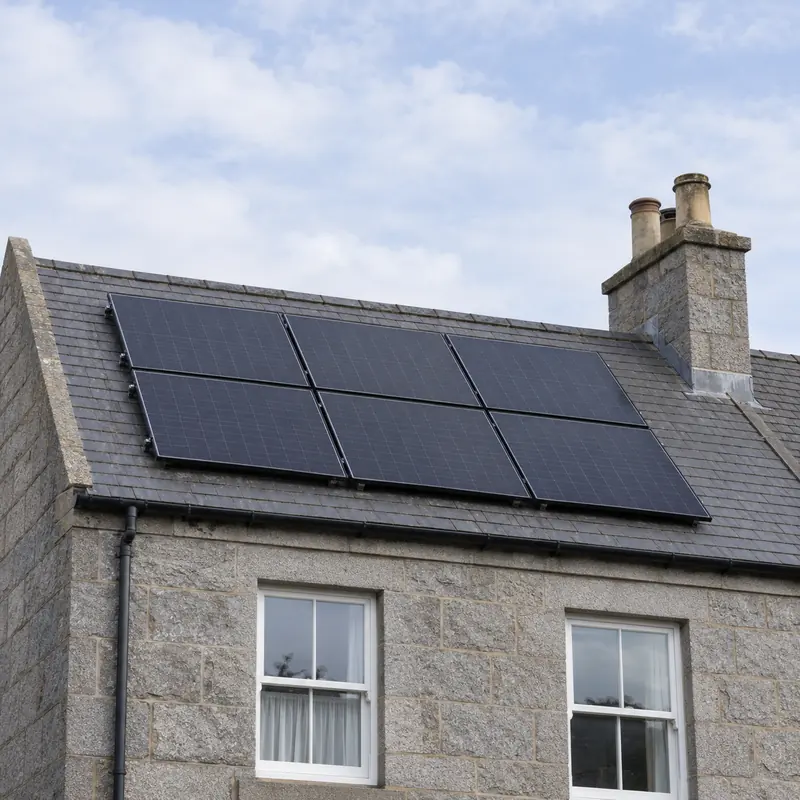
Slate is common on Aberdeen's granite homes, and it's entirely workable. Fitting takes longer than on concrete tiles, because slates are lifted individually and flashing is cut to suit, and that shows in the quote as labour. A granite house built to last centuries is a solid base for panels designed to last decades.
Roof Size
A typical 4.5 kWp system uses around 12 panels and covers 20 to 30 square metres of roof, according to the Energy Saving Trust. A smaller roof takes a smaller system. It generates less, but there's no minimum size.
East, West or South Facing
South gives the highest output. East- or west-facing roofs produce around 15 to 20% less, which lowers the savings but doesn't rule solar out. North-facing roofs aren't recommended.
Shading
Chimneys, neighbouring buildings and trees can cost more output than a less-than-ideal direction. Optimisers let each panel work on its own, so one shaded panel doesn't drag down the rest. Our vetted installer checks shading as part of the quote.
Planning Permission
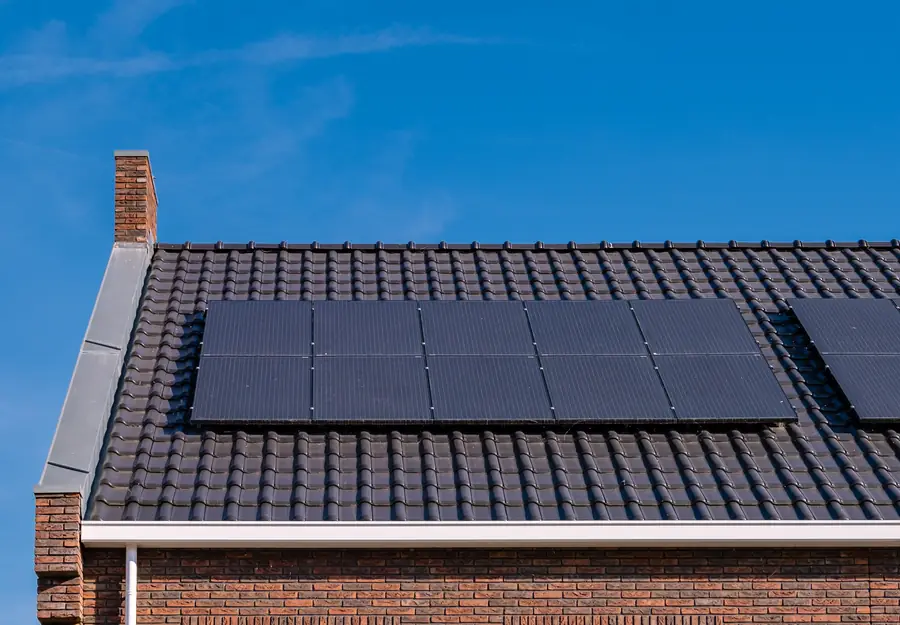
Most homes in Scotland don't need planning permission for roof panels, provided they don't stick out more than 1 metre from the roof. The exceptions:
- Listed buildings: permission is needed.
- Conservation areas: panels are allowed without permission on the rear, or on a side roof that doesn't face a road. The front elevation, or a side facing a road, needs permission. Aberdeen has 11 conservation areas, from Union Street to Footdee.
- Flats and shared roofs: check with the council and the other owners before going ahead.
If you're unsure, check with Aberdeen City Council or Aberdeenshire Council. Our vetted installer can also advise as part of the quote.
Storage
Adding Battery Storage
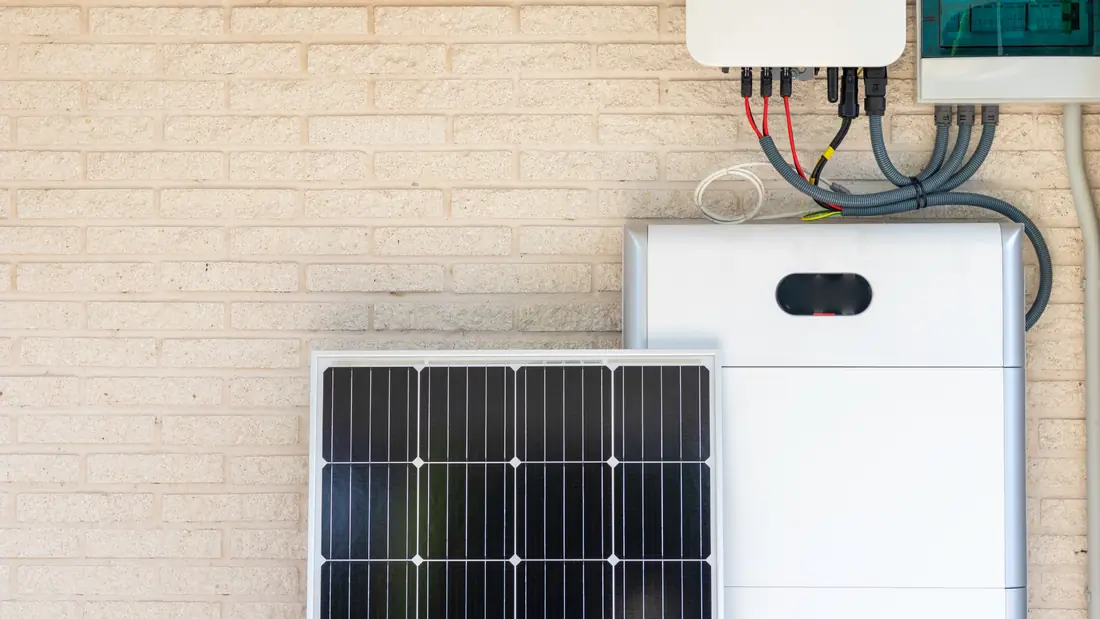
Without a battery, most of what your panels generate during the day goes to the grid, especially if you're out at work. A battery stores it for the evening, so you use more of your own power.
A Unit Kept vs a Unit Exported
A unit you keep is worth 26.35p, because you don't have to buy it. A unit you export earns 12p. That difference is the whole case for a battery.
Is It Worth It?
On the savings figures above, a 5 to 6 kWh battery adds roughly £195 to £225 a year. The Energy Saving Trust puts battery costs at £5,000 to £8,000, so on bill savings alone it takes a long time to pay back. The case gets stronger if you have an electric car, a heat pump or a time-of-use tariff that lets you charge cheaply overnight. For most homes, panels first and a battery later is a sensible order.
Adding a Battery Later
If a hybrid inverter is fitted with your panels, a battery can usually be added later without replacing it. Batteries added to existing panels also qualify for 0% VAT until 31 March 2027.
On the Day
Installation Day, Step by Step
Most home installations take one to two days. Nothing happens until you've had your quote and decided to go ahead.
Survey and Scaffolding
Our vetted installer checks the roof's condition and covering, then puts up scaffolding to suit the house and the street. A terrace with no off-street parking takes longer to scaffold than a detached house with side access.
Mounting and Panels
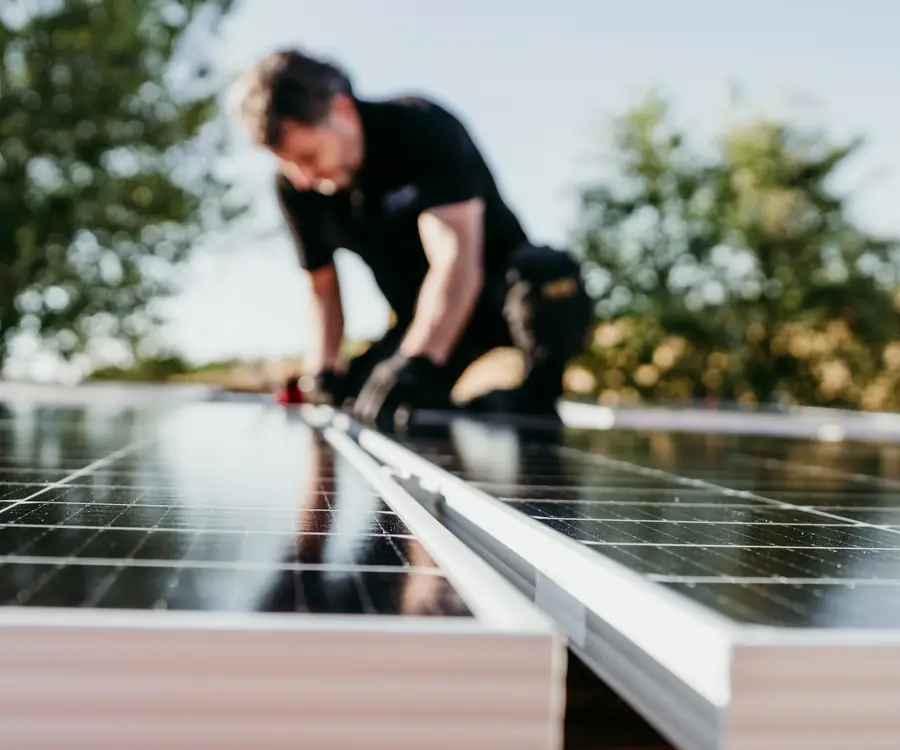
Selected slates or tiles are lifted so brackets can be fixed to the rafters, then replaced with waterproof flashing. Rails go on, then the panels.
Electrical Connection
The panels are wired to the inverter, and the inverter to your home's supply. Isolators and a generation meter are fitted. Your installer notifies SSEN, the local network operator, within 28 days.
Commissioning and Your MCS Certificate
The system is tested, and you're shown how it works. You receive your warranties and documents, and the installation is registered with MCS. Keep the certificate: you'll need it for export payments.
For Businesses
Solar for Aberdeen Businesses
If you run a shop, café, garage, workshop or small office and control your own roof, solar can cut your overheads the same way it cuts a household bill. Businesses often use most of their power in daylight hours, when panels are generating, so more of the output goes straight into use.
Two differences from homes: business installations carry VAT at the standard rate, which VAT-registered businesses can usually reclaim, and planning rules for business roofs are set separately. Large commercial and industrial sites aren't covered.
Coverage
Areas Covered Across Aberdeen and Aberdeenshire
Our vetted installer covers every AB postcode across the city and the shire.
Aberdeen City
- City Centre
- West End
- Rosemount
- Old Aberdeen
- Torry
- Ferryhill
- Bridge of Don
- Dyce
- Bucksburn
- Kingswells
- Cults
- Bieldside
- Milltimber
- Peterculter
- Cove Bay
- Danestone
- Mastrick
- Hazlehead
Aberdeenshire
- Westhill
- Portlethen
- Stonehaven
- Banchory
- Inverurie
- Kintore
- Ellon
- Oldmeldrum
- Newmachar
- Huntly
- Turriff
- Peterhead
- Fraserburgh
- Banff
- Aboyne
- Ballater
- Alford
- Laurencekirk
Your Questions
Common Questions
Is the quote really free?
Yes. There's no charge for the quote and no obligation to go ahead.
How many companies will contact me?
One. Your details go to our vetted local installer covering your postcode, who contacts you directly.
What happens to my details?
They're passed to our vetted local installer so they can prepare your quote, and nowhere else. ReachAI Ltd is registered with the Information Commissioner's Office under reference ZB828222. Full detail is in the Privacy Policy.
Why do you only ask for my postcode?
It's all that's needed to confirm our vetted installer covers you. They take your full address when they call, once you've decided you want a quote.
How are solar installers in Aberdeen vetted?
Before any enquiry is passed on, our installer is checked for MCS certification, company registration, public liability insurance and independent reviews. They're rated 4.5 on Trustpilot and 5 stars on Google.
How quickly will I hear back?
Most enquiries are contacted within one working day.
Do solar panels work in an Aberdeen winter?
They work, but they produce far less. A south-facing system generates about a sixth as much in December as it does in May. Panels need daylight rather than direct sun, so overcast days still count. Most of your year's savings come between April and September.
Are there grants for solar panels in Aberdeen?
Not for standard panels at the moment. The main help is 0% VAT until 31 March 2027. Households on certain benefits may qualify for ECO4 (until 31 December 2026) or Warmer Homes Scotland. The grants section above has the details.
Do I need planning permission in Aberdeen?
Usually not. Permission is needed for listed buildings, for panels sticking out more than 1 metre, and in conservation areas when panels would go on the front of the house or a side facing a road. The planning tab above explains more.
How does the Smart Export Guarantee work?
Large energy suppliers must offer a tariff that pays you for electricity you send to the grid. You need an MCS certificate and a smart meter that records exports. Rates vary widely between suppliers, so compare them. You don't have to use the same supplier for export as for the electricity you buy.
How long do solar panels last?
Panels should last 30 years or more. The inverter usually needs replacing once, after around 12 years.
Is the 0% VAT going to end?
It's legislated to end on 31 March 2027, when the rate returns to 5%. On a £6,688 system, that's about £334. Government policy can change, but that is the position today.
I already have panels. Can I add a battery?
Often, yes, particularly where a hybrid inverter was fitted. Our vetted installer confirms what your system can take as part of the quote.
What happens if I move house?
The panels are a fixture and stay with the house. Keep your MCS certificate, warranties and generation records together, because a buyer's solicitor will usually ask for them.
I rent my home. Can I get a quote?
Quotes are for property owners. If you rent, your landlord can request one for the property.
The Next Step
Get Your Free Installer Quote
Around 60 seconds. One installer. No cost and no obligation.
Start My Free QuoteSources and Method
All figures were checked in September 2026.
- Electricity prices: Ofgem energy price cap, 1 October to 31 December 2026, Northern Scotland, Direct Debit.
- Export rates: Octopus Energy (Outgoing Octopus); Ecotricity (Smart Export).
- Solar generation: PVGIS-SARAH3, European Commission Joint Research Centre. 1 kWp, 35° pitch, south facing, 14% system losses. Aberdeen (57.148, −2.093) and London (51.507, −0.128).
- Self-consumption: MCS Guidance Note MGD 003, "In half the day", "Home all day" and "Out all day" archetypes, 3,500 kWh annual use.
- Local installations and costs: MCS installation data, Aberdeen City and Aberdeenshire.
- Scotland costs: DESNZ Solar PV cost data, 2025/26.
- System size, battery cost and lifespan: Energy Saving Trust; Home Energy Scotland.
- Climate: Met Office, Dyce climate averages, 1991 to 2020.
- Daylight: timeanddate.com, Aberdeen.
- VAT: HMRC VAT Notice 708/6.
- Funding: Home Energy Scotland; DESNZ (ECO4 end date).
- Planning: Scottish Government Planning Circular 1/2024, Class 6HA; Aberdeen City Council.
- Grid connection: SSEN.